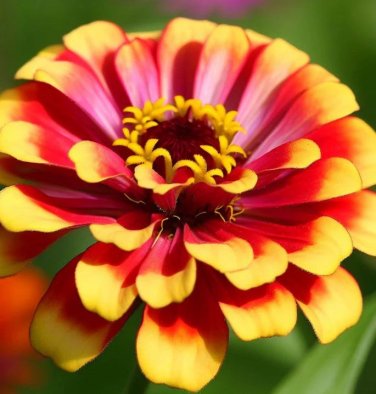
*NEW* Sombrero Zinnia Seeds Zinnia elegans
These heirloom pink and white bicolored flowers make a lovely addition to the flowerbed, hanging basket, or windowbox. This dwarf variety of sweet peas grows only 2 feet tall. Honeybees and butterflies are attracted to the sweetly scented blossoms.
According to traditional lore, poet John Keats first called these fragrant country flowers "sweet peas." It has also been called the queen of annuals and is the quintessential old fashioned English flower. Though accounts of this flower's origins differ, most historians agree that a Franciscan monk named Francisco Cupani found it growing when visiting the island of Sicily. In 1699, he sent the seeds of the plant to a botanist in Amsterdam, Dr. Casper Commelin, who published the first recorded description and illustration of sweet peas in 1701. Dr. Leonard Plukenet, the Royal Professor of Botany and gardener of Queen Mary, also recorded obtaining a specimen of sweet pea in the early 18th century.
Cupid Pink Dwarf Sweet Pea Seeds, scientifically known as Lathyrus odoratus, are annual flowers that produce fragrant pink blooms and grow to about 2 feet tall. They are ideal for containers, borders, and attract pollinators like bees and butterflies.
Flower Color Various shades of pink
Growth Habit Dwarf, bushy, or climbing
Height 12-24 inches (30-60 cm)
Planting Depth 1/2 inch (1.27 cm)
Spacing 6-12 inches (15-30 cm)
Soil Requirements Well-draining, rich in organic matter
Light Requirements Full sun to partial shade
Watering Regular watering; keep soil moist
Hardiness Zones 3-11
Growing Instructions
Sowing Time: Plant seeds outdoors after the last frost or indoors 6-8 weeks before the last frost.
Germination Time: 7-21 days.
Seed Packet Size: Usually contains 35-50 seeds.
Benefits
Attracts pollinators like bees and butterflies.
Great for containers, borders, and trellises.
Simple to grow, making it perfect for both beginner and seasoned gardeners.
Cupid Pink Dwarf Sweet Pea seeds are an excellent option for bringing color and fragrance to your garden. They flourish in cooler temperatures and are ideal for planting in spring.