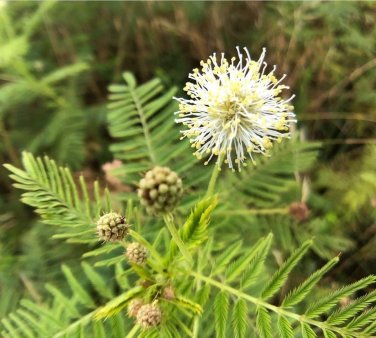
Illinois Bundleflower (Desmanthus illinoensis) Flower 50 Seeds
This unique native plant showcases unusual coiled seed pods along with white flowers. The fern-like leaves are responsive to light and touch, and they might wilt for a bit to manage temperature and moisture. This species is included in various native seed mixes.
Illinois Bundleflower seeds come from a native perennial plant known as Desmanthus illinoensis, which features fern-like leaves and small white flowers. These seeds are often used for wildlife food plots and can enhance soil health through nitrogen fixation.
Illinois bundleflower (Desmanthus illinoensis) is a legume that fixes nitrogen, offering nourishment for wildlife and enriching the soil, as its seeds are a popular snack for birds, deer, antelope, and rodents. This dual role makes it one of the most significant native legumes. It adapts well to a variety of soils and growing conditions. One interesting aspect of the leaves is their responsiveness to light and touch, leading to temporary wilting to regulate temperature and minimize moisture loss. Native American children once used the plant's distinctive round seed heads as rattles.
Common Names: Prairie Mimosa, Spider Bean
Latin Name: Desmanthus illinoensis
Species Origin: Native Wildflower of the US
Type: Native Wildflowers
Life Cycle: Perennial
USDA Zones: 4, 5, 6, 7, 8, 9
US Regions: Arid/Desert, Plains/Texas, Midwest, Northeast, Southeast
Seeds per Ounce: 4,700
Stratification: No Stratification Needed
Germination Ease: No Stratification Required
Sunlight: Prefers Full Sun
Height: 48 Inches Tall
Color: Cream and Yellow
Bloom Season: Late Summer Blooms
Sowing: Before you plant the Illinois bundleflower seeds for sale, pour 180°F water over them and let them soak overnight. This helps soften the seed coat and speeds up germination. After the last frost in spring, plant them 1/4" deep and keep the soil moist until they germinate, which should take about 10-15 days. If you want to start the seeds indoors, sow them in a flat 4-6 weeks before the last frost; keep the soil lightly moist and at 70°F until they sprout. Don’t forget to thin or transplant the seedlings.
Growing: This plant can handle most types of soil, except for heavy clay. Water the seedlings until they’re established; once they’re mature, they can handle some drought but will appreciate a drink during dry spells. In good conditions, this plant will self-sow easily.
Harvesting: This delicate plant wilts quickly when touched, so it’s better suited for the garden or prairie instead of being used as a cut flower.
Seed Saving: After it flowers, this plant produces unique round clusters of twisted seed pods. When they’re ripe, the dark brown pods will split open to reveal the mature reddish-brown seeds. Shake the pods over a container to collect the seeds. Store the cleaned seeds in a cool, dry spot.