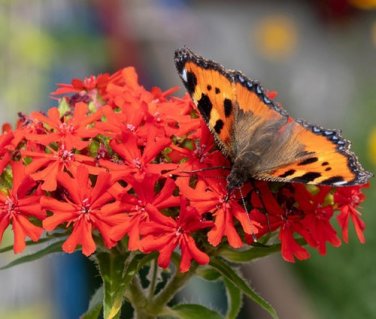
Maltese Cross Seeds Lychnis chalcedonica
These vibrant reddish-orange flowers grow in clusters and look like a pointed star or cross. They're a favorite among hummingbirds and Swallowtail butterflies, and you can easily grow them in most flower gardens.
Originally from parts of Russia and northern Asia, this plant is said to have made its way to Europe with the Crusaders coming back from the Middle East. It quickly became a garden favorite and is even listed among the plants that Thomas Jefferson cultivated in his experimental gardens at Monticello. Later on, the Royal Horticultural Society awarded it the Award of Garden Merit. The common name is derived from the flower's shape, which resembles the Maltese Cross.
Common Names: Jerusalem Cross
Latin Name: Lychnis chalcedonica
Species Origin: Introduced US Wildflower
Type: Garden Flowers
Life Cycle: Perennial
USDA Zones: 3, 4, 5, 6, 7, 8, 9, 10, 11
US Regions: California, Mountain, Arid/Desert, Plains/Texas, Midwest, Northern, Northeast, Southeast
Seeds per Ounce: 62,000
Stratification: No Stratification
Germination Ease: No Stratification
Sunlight: Full Sun, Part Sun
Plant Height: 24"-36"
Plant Spacing: 15 - 18"
Color: Pink, Red
Bloom Season: Blooms Late Summer, Blooms Early Fall
Uses: Deer Resistant, Attracts bees, birds, & butterflies
Sowing: Start by directly sowing in early spring, as soon as the soil is workable; lightly press the seeds into the soil surface because Lychnis Chalcedonica seeds require light for germination. Keep the soil evenly moist until germination occurs, which typically takes about 2-3 weeks. If you prefer to start indoors, plant the Maltese Cross seeds in germination flats 6-8 weeks before the last spring frost. Ensure the soil remains moist, and transplant the seedlings as soon as they can be safely handled.
Growing: Make sure to water the plants well and remove any weeds. This plant thrives on consistent moisture but doesn't do well in overly soggy soil. To encourage more blooms, trim back by one third after the initial blooms have faded. These long-lasting plants can spread under good growing conditions, and mature plants can be divided in either spring or fall. The flowers are great for attracting butterflies and hummingbirds.
Harvesting: When cutting flowers, select stems with blooms that have just opened. Remove any foliage that will be submerged in water, and place the stems in water right away.
Seed Saving: Once the flowers have faded, clusters of papery pods will form, which will eventually open at the top to release their seeds. Collect the ripe seeds as soon as the pods open to avoid losing them. Store the Lychnis Chalcedonica seeds in a cool, dry location.