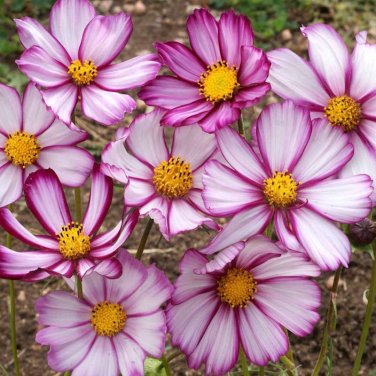
Cosmos Picotee (Cosmos bipinnatus) Flower 100 Seeds
This stunning plant features pure white blooms with edges that range from rosy pink to magenta, making it a unique variety of Cosmos. It appears elegant and a bit high-maintenance, but honestly, it requires minimal care to thrive. Being an annual, it's super easy to cultivate, making it an ideal choice for beginners who are just getting into seeds.
Thanks to its Mexican roots, these vibrant annuals can handle intense heat and drought while showcasing their natural beauty and strength. Spanish explorers on the hunt for gold stumbled upon these flowers during their travels in Mexico. Mission gardens often showcased these blooms, and the priests named them "cosmos," which means a harmonious whole in Greek, due to their perfectly arranged petals. Cosmos flowers made their debut in England thanks to Spanish ambassadors in the late 1700s, and they arrived in the United States in the next century.
Latin Name: Cosmos bipinnatus
Species Origin: Mexico
Type: Garden Flowers
Life Cycle: Annual
USDA Zones: 1, 2, 3, 4, 5, 6, 7, 8, 9, 10, 11, 12
US Regions: California, Mountain, Arid/Desert, Plains/Texas, Midwest, Northern, Northeast, Southeast
Seeds per Ounce: 4,000
Stratification: No Stratification
Germination Ease: No Stratification
Sunlight: Full Sun
Height: 48 Inches
Color: White, Pink
Bloom Season: Blooms Early Summer, Blooms Late Summer, Blooms Early Fall
Uses: Cut Flowers
Sowing: In early spring or after the last frost, sprinkle the Picotee Cosmos seeds on top of loose soil. Keep the soil slightly moist until they germinate, which should happen within 10-20 days at soil temperatures between 65-75 degrees F. Cooler soil temperatures might slow down germination. You don’t need to thin the seedlings, but you can transplant them if they seem too crowded. Since these seeds sprout quickly in warm soil, you can plant them anytime before midsummer for another round of flowers. To start the Picotee Cosmos seeds indoors, sow them on the surface of a flat 6-8 weeks before the last spring frost; keep the soil consistently moist and at a temperature of 70-75 degrees F until they germinate. Once there’s no risk of frost, move them outside.
Growing: Water these plants regularly until they start to bloom; after that, they become quite drought-resistant. Be careful not to over-water them, as they thrive in dry conditions and heat; if there’s a long dry spell, give the plants a deep watering now and then. If you notice blooming slowing down, trim the plant back to 12" for new growth; you’ll see more flowers in about 4 weeks. Taller plants might need some support or staking. If you let them self-seed, the Picotee Cosmos will produce a fresh batch of blooms next year. This flower is great for attracting birds, butterflies, and bees.
Harvesting: Picotee Cosmos flowers make beautiful, long-lasting cut flowers. Cut long stems of blossoms that have just opened, and remove any leaves that will be submerged in water. These flowers typically last 7-10 days in a vase. Cosmos blossoms also look great as dried flowers.
Seed Saving: Let the flowers shed their petals and form spiky seed heads. Once they’re ripe, the heads will turn brown or dark brown and can be easily crumbled to expose the narrow, sharp seeds. Take the ripe seed heads and lay them out to dry in a spot that’s not in direct sunlight. After they’re fully dried, break the heads apart to get the seeds out from the husk. Keep the cleaned Picotee Cosmos seeds in a cool, dry location.