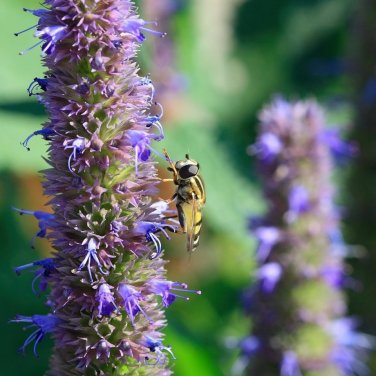
Anise Hyssop Seeds
A member of the mint family, this wildflower adds a wonderfully rich aroma to any herb garden. The tall lavender flower spikes draw in tons of hummingbirds, bees, and butterflies. Beekeepers love it, and we've discovered that the anise honey produced from this plant is fantastic!
Herbalists utilize this mint family member for cooking, as the leaves brew a superb tea and the flowers are also safe to eat. Native to the north central United States, anise hyssop (Agastache foeniculum) is a traditional medicinal herb for Native Americans; its leaves have antibacterial properties that have been used to treat colds, coughs, and digestive issues. Thanks to the subtle anise flavor it imparts to honey, Agastache foeniculum became a favorite among colonists, who would plant anise hyssop seeds close to their beehives. We also have a variety of other hyssop wildflower seeds available online.
Common Names: Licorice Mint, Blue Giant Hyssop
Latin Name: Agastache foeniculum
Species Origin: US Native Wildflower
Type: Native Wildflowers
Life Cycle: Perennial
USDA Zones: 2, 3, 4, 5, 6, 7, 8
US Regions: California, Mountain, Arid/Desert, Plains/Texas, Midwest, Northern, Northeast, Southeast
Seeds per Ounce: 77,500
Stratification: Cold/Wet for 4 Weeks
Germination Ease: Stratify 4 Weeks
Sunlight: Full Sun, Part Sun
Height: 32 Inches
Color: Purple
Bloom Season: Blooms Early Summer, Blooms Late Summer, Blooms Early Fall
Uses: Attracts Pollinators, Attracts Honeybees, Attracts Butterflies, Hummingbirds, Aromatic, Cut Flowers, Dried Flowers, Deer Resistant
Sowing: In late fall, you can directly sow Agastache seeds on the soil's surface. If you're planting in spring, mix the anise hyssop seeds with some moist sand and keep them in the fridge for 30 days before you plant. For indoor planting, just sprinkle the seeds on the soil surface in a flat; maintain a soil temperature of 70-75 degrees F and keep it consistently moist until they germinate.
Growing: This plant is pretty drought-resistant and thrives in hot weather, but it does best with regular watering. It doesn't like soggy soil; sandy or rocky soil with good drainage is what it prefers. It can reseed itself easily, but if you get some unwanted volunteers, you can just move or transplant them. You can also divide established plants. This plant is a magnet for bees, hummingbirds, butterflies, and other beneficial insects.
Harvesting: You can pick fresh leaves for tea, salads, or medicinal purposes throughout the growing season; the best time to do this is in the morning after the dew has dried. Start by taking individual leaves from the bottom of the stem and work your way up. Just remember not to take more than 60% of the Anise Hyssop plant at once. If you want to harvest entire stalks for drying, cut them 2-3 inches above the ground and hang them upside down to dry.
Seed Saving: When the flower spikes start to dry and turn brown, go ahead and remove them and spread them out to dry; then thresh them to get the seeds out. You can also shake the seed heads of the whole plant into a container, but make sure to do this daily until all the seeds are ready. Store the anise hyssop seeds in a cool, dry spot.