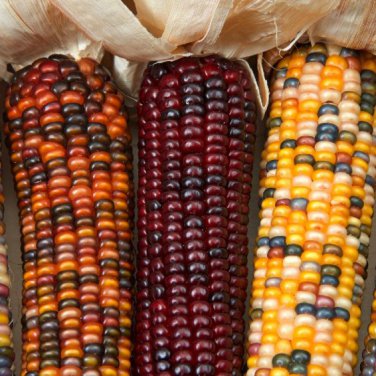
Wampum Ornamental Corn Seeds, Zea mays 50 Seeds Free Shipping!
This is a charming early ornamental corn that boasts large ears packed with vibrant kernels, making it perfect for decoration! You can also use the multi-colored tassels for your fall decor.
The first kind of corn, often referred to as Indian corn or maize, was discovered by the Pilgrims when they landed in the New World. The Indians provided this essential resource, which played a crucial role in their survival. Besides consuming the corn, the clever Pilgrims utilized the husks to create various items like shoes, ropes, dolls, and even chair seats. Today's sweet corn, field corn, and ornamental corn all trace their roots back to Indian corn.
Latin Name: Zea mays
Type: Open Pollinated, Heirloom, Warm Season
USDA Zones: 3, 4, 5, 6, 7, 8, 9, 10, 11, 12
Seeds per Ounce: 240
Planting Method: Direct Sow
Sunlight: Full Sun
Height: 84 Inches
Color: Mixed, White, Cream, Yellow, Blue, Purple
Sowing: Get the soil ready by mixing in compost or other organic materials. A week after the last frost or when the soil consistently hits 60 degrees F, plant the corn 1" deep and 8-12" apart. Planting in blocks of four short rows helps with pollination. You should see germination in about 5-6 days. For some companion planting perks, try planting corn alongside cucumbers, peas, or pole beans; plants that enjoy shade also thrive with corn. Just steer clear of planting tomatoes near these colorful corn seeds.
Growing: Once the corn starts to grow, keep it moist and be careful to pull out any weeds; corn struggles against weeds, so using mulch can help. Adding more organic matter or compost supports growth since corn is a heavy feeder. Remember that corn has shallow roots that can easily get damaged if you hoe too much. Keep an eye out for pests, as corn tends to attract a lot of troublesome insects and animals.
Harvesting: Letting the corn dry completely on the stalks in the field yields the best results; when it's time to harvest, both the stalk and the ears should be fully brown with no green left. However, if the weather is rainy and humid, you might need to finish drying them indoors. Find a dry spot with moderate heat, but keep it out of direct sunlight; you can hang the stalks upside down or lay them flat.
Seed Saving: Since corn can easily cross-pollinate with other types, you'll need to keep your seed plants about 1,000 feet away from other pollinating corn varieties or find a way to prevent them from mixing. Let the seed corn dry completely on the stalk until both the husk and stalk turn brown. If it starts to rain, cut the stalks and lay them in a dry, well-ventilated area. To check for dryness, hit the kernels with a hammer; if they break apart, they’re ready for storage. Remove the kernels by running your hands over the cobs and winnow out the chaff. Store Wampum Ornamental corn seeds in a cool, dry place.