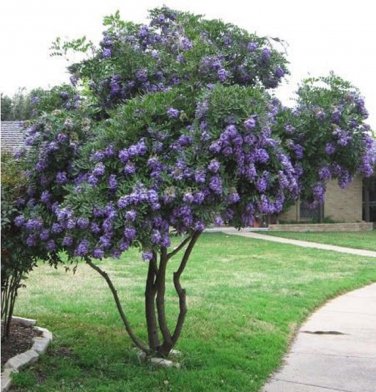
Sophora Secundiflora aka Texas Mountain Laurel, 10 Seeds Free USPS Ground Shipping with Tracking!
Texas mountain laurel (Dermatophyllum secundiflorum, formerly known as Sophora secundiflora) is a flowering shrub that hails from Mexico and the southwestern United States. Don't mix it up with Kalmia latifolia, which is also called mountain laurel. It's also referred to as Texas mescal bean (even though it's not related to mescal at all), coral bean, hot bean, frijolillo, and frijolito. During its blooming season, it showcases clusters of vibrant flowers in a stunning mix of lavender, periwinkle, and purple. These blooms have a delightful fragrance that some say resembles grape Kool-Aid, much like the scent of heirloom German irises.
The flower panicles, which look a lot like wisteria because of their color and shape, start to appear in early spring, sometimes as early as February, with seed pods showing up in the summer. While it's usually grown as a large shrub, you can also prune it to shape it into a small tree, reaching a maximum height of 20 feet. This evergreen shrub is a native that remains visually appealing throughout all four seasons, featuring slender oval leaves that are smooth and leathery. The trunk typically doesn't grow straight up, and the bark is smooth.
Despite not being related to agave, the plant that is the main ingredient for mescal, this plant does have a history of being consumed as a ceremonial hallucinogen by some Native American peoples, who eventually supplanted its use with peyote. The seeds, which dry to a deep red color, have been used to make beads for jewelry. The seeds of this plant are highly toxic, and the flowers and leaves are also toxic to both humans and animals1. It is deer resistant and tolerant of difficult growing conditions such as clay soil and drought. It's also loved by pollinators who are drawn to its rich fragrance and colorful blossoms.
Common Name: Texas mountain laurel, Texas mescalbean, coral bean, hot bean, frigolito
Botanical Name: Dermatophyllum secundiflorum
Family: Fabaceae
Plant Type: Evergreen flowering shrub
Mature Size: Can grow up to 20 feet tall
Sun Exposure: Prefers full sun to part shade
Soil Type: Needs well-drained soil
Soil pH: Slightly alkaline, ranging from 5.4 to 6.7
Bloom Time: Blooms in March and April
Flower Color: Purple
Hardiness Zones: 7b to 11, USA
Native Areas: Found in Mexico and the Southwest US
Toxicity: Toxic to both people and pets.
Texas Mountain Laurel Care
Taking care of Texas mountain laurel is pretty easy once it’s settled in. It’s a great choice for a patio tree and can also work well as a hedge. Just keep in mind that it grows slowly, so it might take a while to reach its full size. The flower buds start forming in August for the next spring, so if you need to prune it late in the season, do it carefully to avoid cutting off those valuable buds.
Light
Texas mountain laurel loves a good amount of sunlight but can handle a bit of shade too. If you plant it in a semi-shady spot, it really enjoys some afternoon sun.
Soil
This shrub can adapt to various soil types, but it thrives best in well-drained soil. You only need to fertilize if the soil is lacking nutrients; too much fertilizer can lead to rapid growth that makes the branches weak and unable to hold the flowers. Adding some calcium to the soil when you plant it can help it get off to a good start.
Water
Texas mountain laurel is super drought-tolerant, making it perfect for low-water gardens. Just be careful not to overwater it, as that can lead to fast growth and weak branches.
Temperature and Humidity
This plant can handle hot summers and lots of bright sunlight. It’s drought-resistant but also enjoys some good rainfall. You don’t have to stress about it drying out since it does well in dry or even desert-like conditions. However, too much humidity, like in a coastal climate, can reduce its health.
Pruning
Texas mountain laurel benefits from some careful pruning when it's young to ensure it develops strong branches and a nice shape. Once it matures, you only need to prune to get rid of any damaged branches and to keep the shape and height you want. You can shape it like a shrub or a small tree, but if you're aiming for a tree shape, make sure to prune it carefully in its early years by trimming side growth and shaping the branches well. Since it grows slowly, be cautious when pruning to avoid harming the plant's structure or main branches, as they may take a while to recover.
Propagating
This shrub doesn't do well with cuttings, partly because it grows slowly. The best way to get this plant in your garden is to buy one from a reliable nursery or supplier. However, if you have some time, you might want to try propagating it from seeds.
Growing from Seeds
Gather seeds when the pods are still green and the seeds are a pale pink (they'll turn red later). If the pods are hard to open, soak them in water. Before planting, you should scarify the seeds; using sandpaper is the easiest way—just scratch the surface lightly until you see tiny nicks. You can either plant them in containers with potting medium or sow them directly in the garden if you're in the right growing zones. They will take a while to germinate. Water them daily for two months, then switch to once a week for a year until you see seedlings. Transplant the seedlings from containers when they reach 3-4 inches tall.
Common Pests and Plant Diseases
Younger shrubs can sometimes be bothered by the genista broom moth, which likes to munch on the leaves, but the damage is just cosmetic and won't harm the plant. You can manage these pests using Bacillus thuringiensis, or you can remove them by hand or spray them off with your garden hose. Just keep in mind that over-fertilizing can lead to caterpillar issues too, so it's best to avoid fertilizing your Texas mountain laurel.