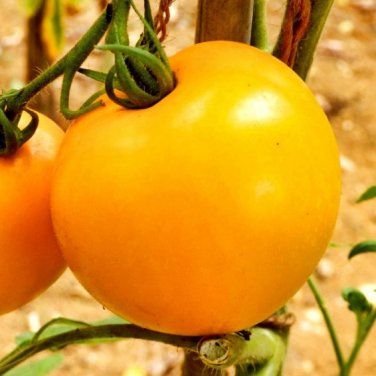
Golden Jubilee Tomato, Lycopersicon esculentum. 50 Seeds
The Golden Jubilee is a garden-friendly vegetable that's higher in Vitamin C and lower in acidity compared to many tomato types. These bright orange tomatoes are not just meaty but also packed with flavor! It's a robust variety that produces well and is resistant to ASC. You can expect tomatoes in about 80 days. It's indeterminate.
While the exact origins are a bit of a mystery, the Golden Jubilee made its debut in the 1948 seed catalog from Grand Rapids Growers, Inc, as an heirloom variety dating back to the early 1900s. In 1963, it was donated to the USDA after being enhanced at the Cheyenne Horticultural Field Station in Wyoming.
Latin Name: Lycopersicon esculentum
Type: Open Pollinated, Heirloom, Indeterminate, Warm Season
USDA Zones: 3, 4, 5, 6, 7, 8, 9, 10, 11, 12
Seeds per Ounce: 10,000
Planting Method: From Transplant
Sunlight: Full Sun
Height: 60 Inches
Color: Yellow
Sowing: Begin by starting your tomato seeds indoors about 6-8 weeks prior to the last spring frost. Plant the golden jubilee heirloom tomato seeds in a flat, 1/4" deep and spaced 1" apart. Maintain a temperature of 70-75 degrees F until they germinate, and ensure they get enough light, either from a sunny window or a grow light. Keep the soil moist, but ensure it drains well. Once the second set of leaves appears, move the seedlings into individual pots, burying the stems up to the lowest leaves to encourage strong roots. About a week before you plan to move them outside, start acclimating them to the outdoor conditions during the day to harden them off; remember, tomatoes can't handle cold weather, so wait until there's no frost risk. When the soil temperature hits at least 70 degrees F, plant the seedlings in full sun and rich soil, again burying the stem up to the lowest leaves. If you're using a trellis, space the plants 2' apart; if you want them to spread out, give them 3-4' of space. For companion planting, tomatoes do well with carrots or onions, but steer clear of planting them with cabbage or potatoes.
Growing: Indeterminate tomato varieties usually thrive best when they have a trellis or some support, as this helps keep them safe from pests and diseases that come from too much contact with the soil. Set up the supports before the seedlings start to vine. As the vines grow, tie them to the support to aid their growth. Be cautious, as temperatures below 55 degrees F can harm production; protect your plants if it gets too cold. A thick layer of mulch will help retain moisture and keep weeds at bay; water your plants weekly, but try not to wet the leaves. Pruning the "suckers"—the shoots that sprout between the main stem and branches—will significantly boost the plant's strength and yield.
Harvesting: To check if tomatoes are ripe, gently press them; the flesh should give a little. The color also shows they're ready. If the stem doesn't come off the vine easily, use scissors to cut it. Tomatoes that ripen on the vine taste the best, but when frost hits, you need to pick all tomatoes, even the green ones. If you have unripe tomatoes, they can still ripen if you keep them warm and out of direct sunlight.
Seed Saving: Since most tomato varieties don't cross-pollinate, you don't have to worry about isolation. Choose fully ripe tomatoes and slice them in half horizontally; then squeeze the pulp into a container. For smaller tomatoes, you can blend them up instead, as the golden jubilee heirloom tomato seeds are tough and won't get damaged. Let the mixture sit for a few days until a thick mold layer forms; this helps get rid of the gelatinous coating on the seeds. After that, pour off the mold and debris, keeping the good seeds at the bottom. Rinse the seeds in a strainer under running water until they're clean, then lay them out to dry in a safe spot away from direct sunlight. Stir them twice daily, and use a fan to help them dry faster if the air is humid. Once the golden jubilee heirloom tomato seeds are fully dry, store them in a cool, dry place for up to four years.