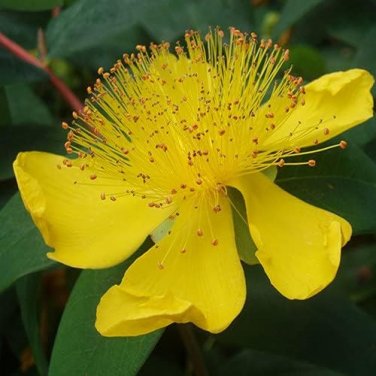
Great St John's Wort Seeds Hypericum pyramidatum. 400 Seeds Free Shipping!
This type of St John's Wort has tall plants and big yellow flowers. It's a perennial that's super easy to grow and is often cultivated for its medicinal benefits. It produces a ton of seeds, so it spreads easily by reseeding.
This flower got its name because it blooms around the summer solstice, coinciding with the traditional St. John feast. It's said to have the power to ward off evil, stemming from its use as a herbal remedy for depression and sadness, which were once thought to be signs of demonic possession. The species name "punctatum," which means "punctured," refers to the small black spots on the leaves and flowers; these aren't actually holes but glands that hold the plant's oils. The word "wort" comes from Old English, indicating a plant that was commonly used for medicinal or herbal purposes.
Latin Name: Hypericum pyramidatum
Species Origin: Native Wildflower of the US
Type: Wildflowers that are native
Life Cycle: Perennial
USDA Zones: 3, 4, 5, 6
US Regions: Midwest, Northern, Northeast
Stratification: Cold and Wet for 8 Weeks
Germination Ease: Stratify for 8 Weeks
Sunlight: Full Sun or Part Sun
Height: 60 Inches
Color: Yellow
Bloom Season: Late Summer Blooms
Sowing: In the fall, directly sow Great St John's Wort seeds by pressing the tiny seeds into the surface of rich soil and adding a very thin layer of soil on top; these seeds need light to germinate. Mixing the seeds with a bit of sand can help with distribution. If you're planting in spring, combine the seeds with moist sand and keep them in the fridge for 60 days before planting. To start indoors, sow the seeds in a flat, keeping the soil lightly moist and at a temperature of 65-70 degrees F until they germinate. Transplant the seedlings outdoors as soon as they can be safely handled.
Growing: Make sure to keep the seedlings watered until they’re established. Mature plants thrive with regular moisture and prefer well-drained, moist soil; they don’t do well in dry conditions. Eventually, this plant may spread through rhizomes, but it won’t become aggressive.
Harvesting: These flowers don’t do well as cut flowers and are best enjoyed right in the garden.
Seed Saving: After the flowers fade, pointed seed pods will form, changing from green to brown as they mature. When they’re ripe, they’ll split open at the top to show the tiny brown seeds. Shake the open pods over a container to collect the seeds. Store the cleaned Hypericum Pyramidatum seeds in a cool, dry place.