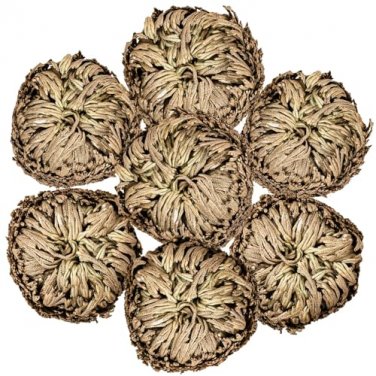
Rose of Jericho. You will receive 3 plants. Free USPS Ground Shipping!
The resurrection plant, commonly known as the Rose of Jericho, is a fascinating type of spike moss celebrated for its remarkable ability to endure years without water. Its fronds tightly coil into a dry, brown sphere, only to unfurl and regain their green hue when they come into contact with moisture. As a houseplant, it flourishes without soil and prefers bright, indirect light.
Common Name: Resurrection plant, Rose of Jericho
Botanical Name: Selaginella lepidophylla
Family: Selaginellaceae
Plant Type: Perennial
Mature Size: 6-12 in. tall, 3-6 in. wide
Sun Exposure: Partial
Soil Type: Well-drained
Soil pH: Neutral
Hardiness Zones: 8-10 (USDA)
Native Area: North America
Resurrection Plant Care
The resurrection plant is an incredibly easy and almost foolproof houseplant, provided you grasp its unique water (or lack thereof) requirements. Here are the essential care guidelines for a resurrection plant:
Position it in a spot with bright, indirect light, steering clear of harsh sunlight.
Place the resurrection plant in a bowl filled with pebbles.
Occasionally rehydrate the plant by adding non-chlorinated water to the bowl.
Maintain a temperature range of 65 to 85 degrees Fahrenheit.
Fertilize lightly twice a year using a highly diluted, water-soluble houseplant fertilizer.
Light
Resurrection plants flourish in abundant light. Thus, select a spot that offers bright, indirect light, like a window facing east or west. Steer clear of areas with intense sunlight; it can be overwhelming for a resurrection plant that has adapted to indoor living.
Soil
Soil isn't essential for resurrection plants; they can thrive in a bowl of pebbles with just a little water, provided they have some rest periods. Alternatively, after soaking the resurrection plants in water, you can move them to a pot filled with well-draining potting mix if you prefer.
Water
To rehydrate resurrection plants and maintain their green appearance, place the plant in a container with pebbles and water. The water should rise just above the pebbles, allowing the plants to rest securely on top without being overly submerged. Resurrection plants are sensitive to water quality, so it's advisable to use distilled water, rainwater, or tap water that has been left out overnight. Once placed in water, it takes about three to four hours for a dried-out resurrection plant to start unfurling. It will fully revive within a few days.
If you keep the plant in water, remember that resurrection plants cannot endure constant water and will rot if left submerged for too long. Therefore, set aside at least one day a week as a water-free rest day. Additionally, every couple of weeks, resurrection plants should be allowed to dry out completely.
Temperature and Humidity
Even though resurrection plants thrive in desert conditions, they are quite sensitive to drastic temperature changes and should not be subjected to extreme heat or cold. If planted outdoors, they cannot withstand significant temperature fluctuations. Ensure they are not left outside when temperatures drop below 65°F or rise above 85°F.
Typically, resurrection plants thrive in standard room temperatures. However, it's best to avoid placing them near drafty vents or windows.
Since these plants are commonly grown on a bowl filled with water and pebbles, humidity is generally not an issue. Nevertheless, if your plant begins to enter dormancy, you can boost humidity by occasionally misting it with distilled water.
Fertilizer
Resurrection plants have minimal fertilization needs. It is advisable to feed them twice a year using a diluted water-soluble houseplant fertilizer. Make sure to dilute the fertilizer to one-tenth of the strength suggested for regular houseplants, providing nourishment to your resurrection plant once in early spring and again in midsummer.
Pruning
Regular pruning is not necessary for resurrection plants, but to maintain a tidy appearance, you can trim away any dead fronds that fail to rehydrate using garden shears or scissors.
Propagating Resurrection Plants
The most effective way to propagate this plant is through division. Resurrection plants are classified as sporophytes. Like ferns, they do not reproduce by flowering and generating seeds. Instead, they reproduce asexually using spores. To divide, take cuttings from the plant during spring or late fall.
Cut a segment of the plant that is sufficiently large to encompass the entire length of its fronds.
Position the cutting on top of gravel or loose soil and water it to stimulate growth. Typically, you will notice the plant starting to grow within just a few days.
Care for the new plant in the same manner as its parent by placing it on a tray or bowl filled with water and gravel, or by planting it in well-drained potting mix.
Overwintering
This plant cannot withstand extreme cold or heat. If you keep your resurrection plant outside during the summer, bring it indoors when temperatures fall below 65 degrees to allow it to overwinter in a dormant state. Store it in a cardboard box in a cool, dry location where it won't be crushed. It will dry out and wait for you to revive it again in the spring.
Resurrection plants that are permanently grown indoors do not need any special winter care.
Common Pests & Plant Diseases
Despite its reputation as a resilient houseplant, the resurrection plant is not free from pests and diseases. It frequently attracts aphids, which can harm the leaves and leave behind a sticky honeydew residue. It is also vulnerable to powdery mildew and leaf spot disease.
Common Problems With Resurrection Plant
Generally, the resurrection plant is quite easy to cultivate and has few issues. However, like any houseplant, there are a few concerns to be mindful of.
Leaves Turning Dark
If you see that your plant's leaves have turned black, feel soft, or emit a sour odor, the probable issue is rot caused by overwatering. You might be able to rescue the plant by cutting off the damaged fronds and decreasing the water in the bowl or tray. The water level should only be enough to slightly cover the pebbles. Additionally, ensure the plant has at least one day each week without any water.