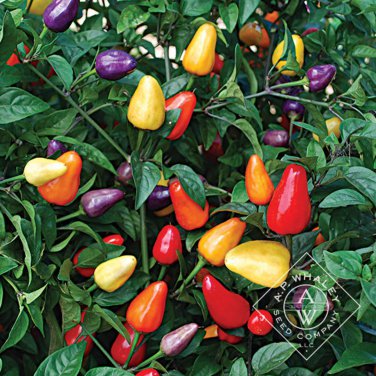
Chinese five pepper Hot Pepper. 10 Seeds
Super hot little peppers 100,000 Scoville, transform into a colorful rainbow when they mature. They ripen into a mix of colors, ranging from purple, cream, yellow, orange, to red. Do I really need to mention how ornamental they are? These plants are perfect for indoor containers. Just grab a few whenever you want to spice up your meals.
Chinese 5 Color Pepper seeds yield bright, decorative peppers that shift colors from purple to cream, yellow, orange, and red as they mature. They flourish in warm, well-drained soil and need full sunlight for the best growth.
Chinese Five Color Pepper (Capsicum annuum) is a decorative and edible variety known for its striking colors and spicy taste. The peppers go through a beautiful transition of five colors: purple, cream, yellow, orange, and red as they ripen.
Germination and Planting
Days to Germination: 7-10 days
Planting Depth: 1/4 inch
Ideal Temperature for Germination: 70-85°F
Start Indoors: 8-12 weeks before the last frost date
Peppers thrive best in warm temperatures. It's best to wait until the frost risk has passed before planting. The ideal daytime temperatures are between 70 and 80°F, while nighttime temperatures should be around 60 to 70°F. Pepper plants prefer warm, well-drained soil. They aren't overly sensitive to soil acidity, but you'll get the best results with a pH between 6.0 and 6.8.
Planting: Start your peppers indoors about eight to ten weeks before the last frost date in your area. Germinating pepper seeds can be tricky, and the seedlings tend to grow slowly. Make sure to space the plants 18 inches apart in rows that are at least 24 inches apart. After transplanting, give them a good watering.
Watering: Keep the soil consistently moist, especially when the fruits are forming. Peppers typically need about an inch of water each week.
Fertilizer: As your peppers grow, switch to a fertilizer that has higher levels of Phosphorous and Potassium. A common mistake gardeners make is using too much nitrogen, which can lead to lush, green plants but very few fruits.
Days to Maturity: Most peppers take about 60 to 80 days to reach maturity.
Harvesting: Bell peppers are usually harvested when they are green and firm but still immature. If you let them ripen on the plant, they'll become sweeter and have more vitamins. Other types of peppers are generally picked when fully mature. Be cautious when harvesting, as the branches can be brittle. Using hand clippers can help prevent breaking the stems. The yield per plant can vary by variety, but bell pepper plants can produce 6 to 8 or more fruits each.
Storing: Keep sweet peppers for up to two weeks in a location that stays between 50 and 55°F. Hot peppers can be enjoyed fresh, dried, or pickled. When they begin to turn red, it's time to harvest them for drying. Just pull the plants out of the ground and hang them upside down in a cool, dry area.
Pests & Diseases: Your pepper plants can attract a few pests. Spider mites and aphids are the most common culprits, with the occasional borer showing up. In many regions, this is a rare issue. For those rare cases, consider using an organic insecticide or dust. While various viruses and diseases can impact peppers, they are not very common. Fungal infections can be managed with fungicides, so apply treatment as soon as you notice any signs.
Tips: Peppers can pollinate themselves. Sometimes, they might cross-pollinate due to pollen carried by bees or other insects. To reduce this chance, avoid planting hot and sweet peppers too close together. But don’t stress, as it won’t affect the fruit of this year’s harvest. Any cross-pollination will only show up in the genetics of the seeds if you decide to save them.