mesembryanthemum crystallinum aka Iceplant seeds Free Shipping!
Mesembryanthemum crystallinum – A Shiny Groundcover with Salty Toughness
Mesembryanthemum crystallinum, often referred to as the crystalline iceplant or common iceplant, is a remarkable succulent known for its sparkling, jewel-like look and strong ability to thrive in poor, salty soils. Originating from the coastal regions of southern Europe and North Africa, this versatile and easy-care plant is valued for both its decorative charm and its unique ecological traits. Whether you want to beautify a rock garden, create an eye-catching container display, or rehabilitate challenging coastal areas, M. crystallinum delivers stunning results with little effort.
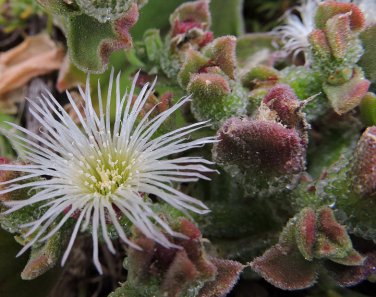
The standout characteristic of this plant is its surface: the leaves and stems are covered with specialized water-retaining cells known as epidermal bladder cells, which reflect light and give the plant a crystalline or “iced” look. These sparkling bladders are not just pretty—they also serve a purpose, helping the plant conserve moisture and withstand salty conditions that would be tough for most other species.
Growing close to the ground, M. crystallinum creates a spreading mat of succulent leaves that usually spans 8 to 24 inches wide. The leaves are fleshy and can range from green to reddish based on environmental factors, often taking on a gentle blush in full sunlight or nutrient-deficient soils. The stems trail along the ground, rooting wherever they touch the soil and quickly covering bare spots.
In late spring to early summer, the plant produces small, daisy-like white flowers that bloom during the day and close at night. Each flower measures about an inch across, featuring numerous delicate petals that contrast beautifully with the shimmering leaves. Although short-lived, the flowers appear in great numbers and are followed by small fruit capsules filled with seeds. Given the right conditions, this species will easily self-seed, creating a sustainable, recurring presence in your garden or landscape.
One of the coolest things about M. crystallinum is how flexible it is with photosynthesis. When the weather is nice and humid, it goes for the usual C3 photosynthesis. But when things get tough—like during a drought or when there's a lot of salt—it switches to CAM photosynthesis, opening its stomata at night to save water. This skill makes it perfect for dry areas, coastal regions, and places with disturbed soil.
In its natural habitats, Mesembryanthemum crystallinum is a pioneer, helping to colonize bare or damaged ground. It's especially good in salty or alkaline spots, where it helps stabilize the soil and prevent erosion. In gardens, it’s a great choice for sandy borders, xeriscapes, containers, green roofs, and even vertical gardens.
It's worth mentioning that in some places (like parts of California and Australia), M. crystallinum is seen as invasive because it can take over disturbed areas and change the soil chemistry by accumulating salt. Responsible gardening means keeping it in check and removing plants before they can spread seeds if you don’t want them to naturalize.
Growing from Seed
Mesembryanthemum crystallinum is super easy to grow from seed, making it perfect for gardeners of all skill levels. Seeds will sprout in 1–2 weeks if you plant them on the surface of moist, sandy soil and give them some light. Don’t bury the seeds too deep—they need light to germinate. Keep the soil moist until they sprout, then cut back on watering as the plants get established. Full sun and good airflow are key to keeping them compact and healthy.
Key Features
Shiny, crystal-like leaves with a unique texture
Fast-growing ground cover that spreads moderately
Thrives in salty, dry, or poor soils where other plants have a hard time
Self-seeds easily in mild climates
Perfect for coastal gardens, containers, and preventing erosion
Switches photosynthesis methods when stressed, making it super adaptable
Flowers attract pollinators and add a delicate touch to the plant’s bold form.