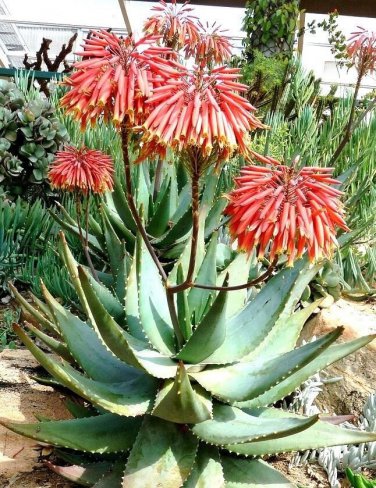
Aloe Comptonii You will receive 10 seeds. Free Shipping!
Species: Aloe comptonii (a succulent belonging to the Aloe genus).
Origin & habitat: This plant is native to South Africa and is usually found in dry, rocky areas with good drainage.
Appearance: It forms a rosette of thick leaves that may be spotted or banded; over time, it creates clumps and can grow a tall flower spike with tubular blooms.
Size: The size can vary based on the plant and its environment, but rosettes are typically 15–45 cm wide.
Growing from seed (concise, prescriptive)
Seed sourcing: Purchase seeds from trusted succulent sellers or specialized nurseries; ensure they provide germination guarantees and images.
Timing: Plant seeds in spring or early summer when the weather is warm (daytime temperatures around 20–28°C).
Medium: Opt for a fast-draining mix (50–70% coarse sand/perlite/pumice + 30–50% sterile potting soil).
Sowing: Surface-sow or lightly press seeds into the soil; avoid burying them more than 1–2 mm deep. Light helps many aloes germinate.
Moisture & humidity: Keep the medium slightly moist using a spray bottle or bottom watering; cover with clear plastic or a propagation dome to retain humidity, but ventilate daily to avoid mold.
Light: Provide bright, indirect light; steer clear of full midday sun for seedlings. Gradually increase light exposure as they grow.
Temperature: Keep the temperature between 20–28°C (68–82°F) for optimal germination.
Germination time: Usually takes 1–6 weeks, but can be longer depending on seed freshness and conditions.
After germination: Slowly remove the cover. Water sparingly; let the top layer dry out between waterings.
Potting on: Transplant when seedlings have several true leaves and are big enough to handle; use small pots with the same well-draining mix.
Fertilizer: Provide light feeding during the growing season with a diluted, balanced fertilizer (¼ strength) every 4–6 weeks.
Care notes & common issues
Light requirements: Mature plants thrive in bright light with some direct sunlight; not enough light can lead to stretching.
Watering: They are quite drought-resistant; steer clear of overwatering and bad drainage as these can lead to root rot.
Pests: Keep an eye out for mealybugs, scale insects, and fungal rot on young plants.
Patience is key: Aloes grown from seeds take their time; it might take a few years before they bloom.
Legal and ethical considerations: Make sure the seeds are sourced legally and not taken from protected wild populations.